By: MacKenzie Arendall
The Old Camposanto
Beneath present-day downtown San Antonio lies one of the city’s most significant yet largely forgotten historical landscapes: the Camposanto burial ground. Few are aware of its existence. Patients at Christus Children’s Hospital do not know that hundreds of children were buried there from 1808 to 1860. Revelers celebrating Fiesta at El Mercado probably do not imagine that in Milam Park, across the street, lie the remains of Santa Anna’s soldiers who perished in the Battle of the Alamo.
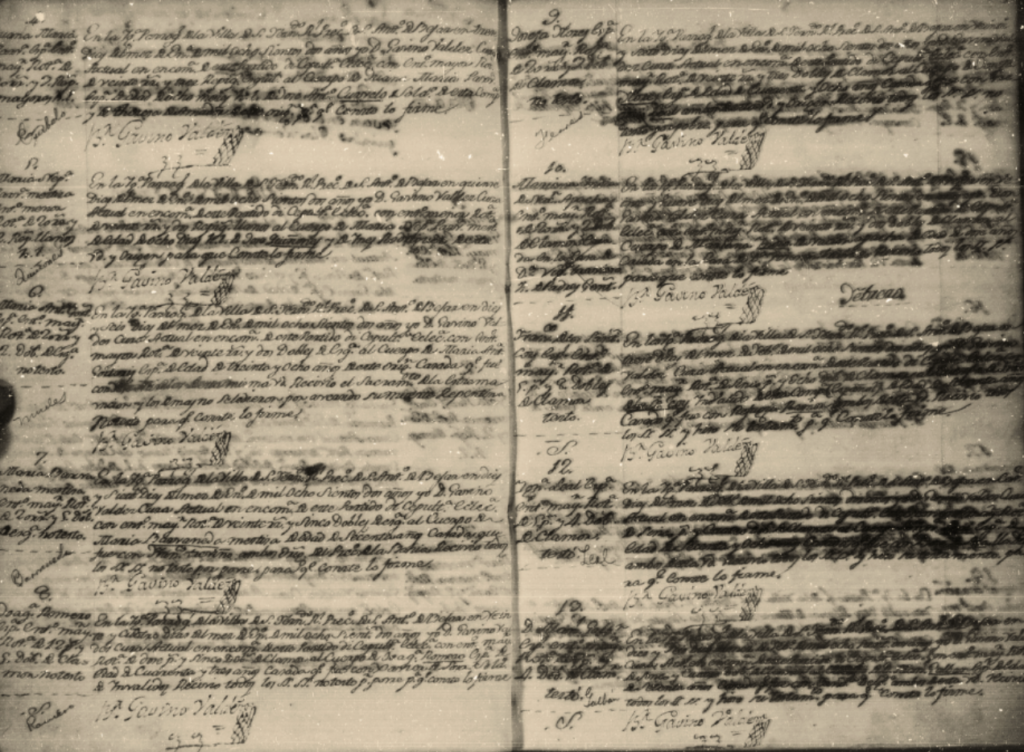
Thankfully, the index, Camposanto: An Ancient Burial Ground of San Antonio, Texas, preserves San Fernando Church archives that were long assumed to be lost, damaged, or incomplete. For over two centuries, these burial records from San Antonio’s Old Camposanto remained hidden in handwritten church archives, accessible only to those who had the means to spend long hours deciphering nineteenth-century Spanish cursive. Historian John Leal then made these documents into a condensed index, which he hand-typed. However, this document was still not easy to find. Today, those records have been converted to something easily usable throughout my summer research project: a digital database. Now, one of San Antonio’s biggest pieces of history can be an easily accessible resource for researchers, genealogists, students, and people of South Texas. The dataset contains over 2,800 burial records dating from 1808 to 1860. With this dataset, users can now explore the many different individuals who shaped early San Antonio and who were then buried at the Old Camposanto. From prominent Spanish families and mission Native Americans to the enslaved, soldiers, and children, this dataset unlocks the key to one of Antonio’s largest pieces of history.
Creating the Dataset:
The database would not exist without the brilliant efforts of the St. Mary’s University History Department. In a St. Mary’s University history course with Dr. Teresa Van Hoy, a student uncovered the long-forgotten burial index from the San Fernando Church. These original records, however, were several centuries old and written in cursive and in Spanish, making them extremely difficult to interpret. However, this class also found documents from a local historian, John Leal, who took personal interest in the index because he had family members buried in the Old Camposanto. He created a typed English index from the original Spanish, preserving the Camposanto records that were previously inaccessible. This transcription became the foundation for this digital database.
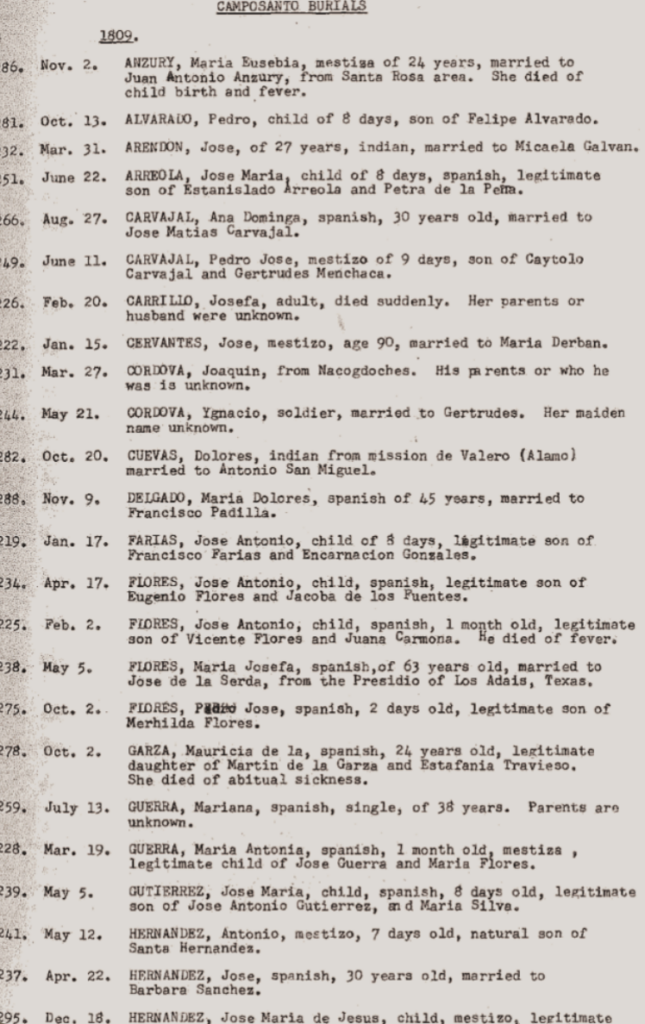
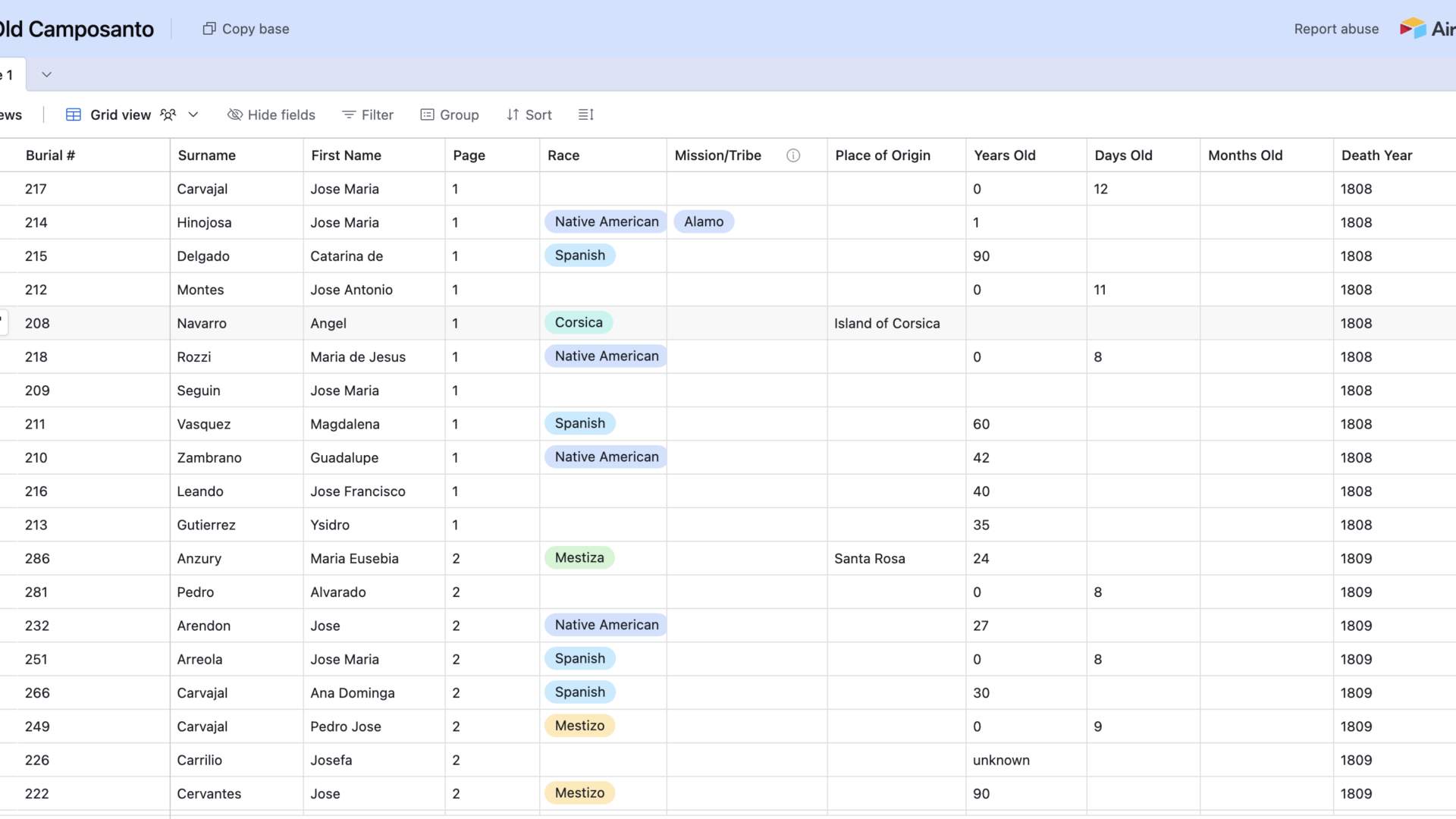
Using his more legible index, I manually entered each burial record into the Airtable database tool, organizing them into searchable fields, producing 2,800 lines of data, recognizing and remembering those buried at this site. This extensive process transformed the archival material into an interactive research tool readily available for qualitative and quantitative studies. Unfortunately, some portions of the original records contain faded ink, torn pages, and difficult handwriting, rendering some spellings and interpretations uncertain. Where possible, the database preserved the original wording while acknowledging these limitations.
The Dataset
In the dataset, I created the following fields to help categorize and make the data searchable: burial number, surname, first name, page number, race, mission/tribe, place of origin, years old, days old, months old, death year, burial month, cause of death, legitimacy, parents, spouse, soldier, notes.
The goal for this dataset is to make the complex and vast Camposanto records easily navigable for a variety of users, regardless of whether they are conducting scholarly research or are just interested in local or family history. They can be browsed individually, sorted, filtered, or grouped. At the top of the database page, you will find the Sort, Filter, and Group tools. With these tools, users can quickly organize 2,800 records by characteristics of their choice.

With these tools, users could:
- Examine mortality trends
- Identify individuals connected to military campaigns, including the Battle of Rosillo and the Alamo
- Locate burials of enslaved or formerly enslaved individuals.
- Explore family names and kinship networks
- Analyze demographic changes over time
- Examine the effects of natural disasters on the people of Old San Antonio
For example, if one wanted to explore Native Americans of the Camposanto, they might select the column “Race”, then “Filter by Field,” and finally select the “Native American” drop-down, and then the database filters the 2,800 lines of records to show only those who are of Native American heritage.
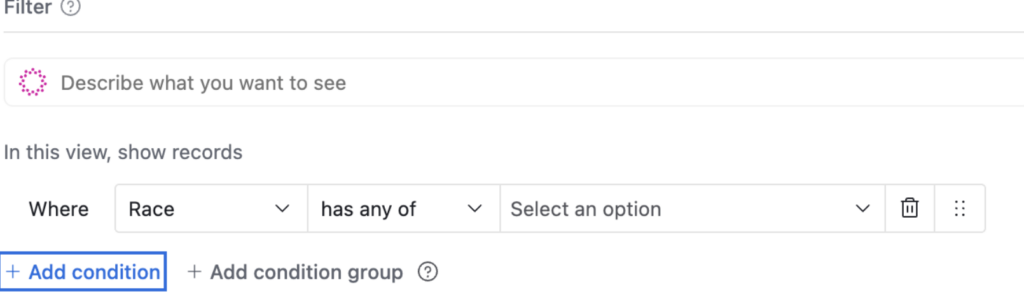
Using these tools transforms the Airtable data, allowing researchers to move from simply viewing a list of individual burial records to using a powerful quantitative and qualitative research resource. Instead of having to painstakingly search through thousands of entries, scholars can quickly identify patterns and answer larger historical questions about people of historic San Antonio.
Start exploring the database today in the app below or click here for a full screen view.
Understanding the Terminology
The records made by the priest of the San Fernando church originate from the early nineteenth century. Because of this, many of the terms used in the index may be unfamiliar to modern readers or non-Spanish speakers. The following glossary provides translations and definitions for some of the more common terms found among the entries.
Illnesses and Causes of Death:
Tiricia: a person who feels without energy (tired/ exhaustion)
Dolor de costado: illness where an individual becomes bedridden
Fley de sangre: blood hemorrhage
Edropocia: water in the body
Avitual/Avictuaciones: habitual illness
Fistola: a sore or boil on the skin
Mosecuela: child gastric pains or cramps
Tisis: tuberculosis
Colico: colic
Ampacho: stomach indigestion
Lumbrices: worms
Alferecia: epilepsy
Pujos: diarrhea
Desconsierto: disconcerted
Postema: tooth infection
Alvogado: drowned
Apoplexia: apoplexy
Lineage and Social Class:
Mestizo/Mestiza: male or female who is half Native American and half Spanish
Coyote/Coyota: male or female child born here from European parents or a baby of the family/ last child born into a family
Mulato/Mulata: male or female who is listed as half Spanish, half negro
Natural child: illegitimate child born out of wedlock
Locations:
Santa Buenaventura: a town in Mexico in the state of Coahuila, south of Piedras Negras, Eagle Pass.
Presidio of Rio Grande: a town in Mexico in the state of Tamaulipas, now named Guerrero.
Looking Forward:
The Old Camposanto dataset is more than a digital transcription. It is a tool that allows for the rediscovery of those who helped establish early San Antonio. Whether your interests lie in genealogy, military history, public health, slavery, Indigenous communities, immigration, or demographic research, the database provides opportunities to ask new questions about the city’s past. As more scholars sift through the database, new stories will emerge, ensuring that the individuals erased by the city can have reconciliation in the form of public remembrance. I encourage researchers to explore this dataset in whatever ways they see fit. From searching for long-lost family members, exploring Native American history in South Texas, researching enslaved burial sites, or simply educating themselves on a long-buried local history, it is my hope that the dataset inspires the next generation of San Antonians to remember those who came before them.
MacKenzie thanks St. Mary’s University for summer research funding (SURF). She also thanks the “Camposanto” research team for their collaboration: Dr. Lindsey Wieck, Cristal Mendez, Dr. Teresa Van Hoy, and Amariah Williams.
